
The Three-Level Hierarchy
That Actually Makes Sense
Everything you wanted to know about areas, projects, sections.
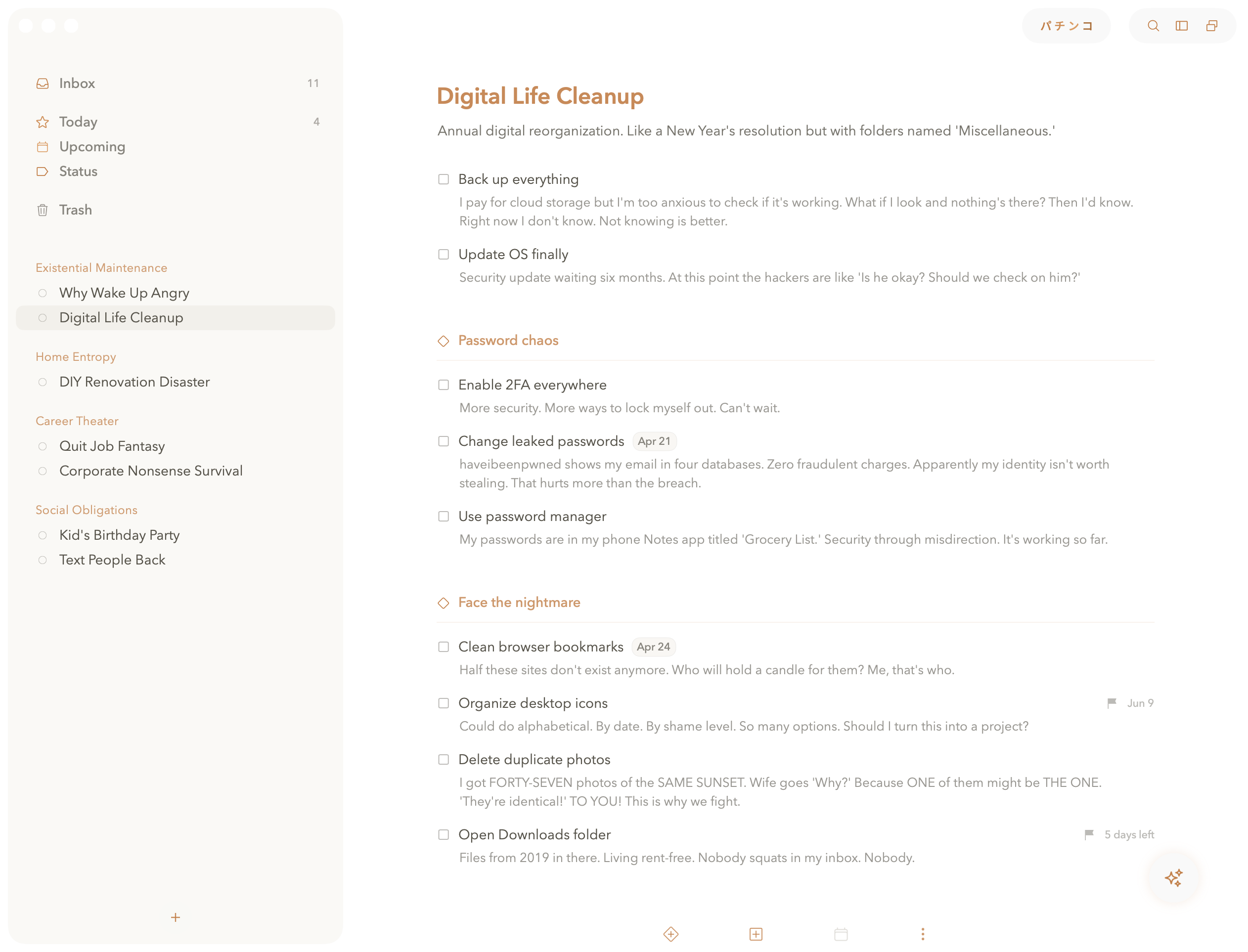
① Create 3-7 major areas (Work, Personal, Health). ② Add specific, completeable projects within areas.
③ Use sections when a project gets large. ④ Keep names clear - avoid "Misc" or "TODO."
THE THREE-LEVEL HIERARCHY
Areas → Projects → Sections
Pachinko gives you three levels of organization. Think of areas as the major departments of your life, ongoing in nature like Personal or Fighting Existential Dread. Projects, however, are specific and completeable initiatives within those departments. And, finally, think of sections as the folders within those initiatives. It's nested boxes all the way down.
Now this is going to shock you, but Mr. "Easyrider" Gary has the lightest list of projects you've ever seen. I, on the other, have perfected organizing at least 20 different undertakings, including solving the Riemann Hypothesis and cutting my 100m dash time below 10s. I'm not saying I'm better than Gary, but you might get more attention from me in our support channels if I see >10 projects in your screenshots. And I'm the nicer one.
HOW TO ACTUALLY USE THIS
Getting Started
Start with areas because they're the easiest to screw up the least. Create 3-7 major life domains. If you have more than 7, you're probably running a small country - respect. Then add projects - these are things you'll actually finish someday. Finally, use sections when a project gets messy enough that you need visual breathing room.
Our sections are actually pretty bad-ass, you should read more about Functions and Sections, in depth.
Common Pitfalls We've All Seen
- Over-organizing Spending more time organizing than doing
- Vague names "Important Stuff" tells you nothing in three weeks
- Too many levels If you need a map to find a task, simplify
- Perfectionism Your hierarchy will evolve, stop tweaking it. Yes, I'm talking to myself here.
- The classic Creating "Miscellaneous" areas you'll never look at again